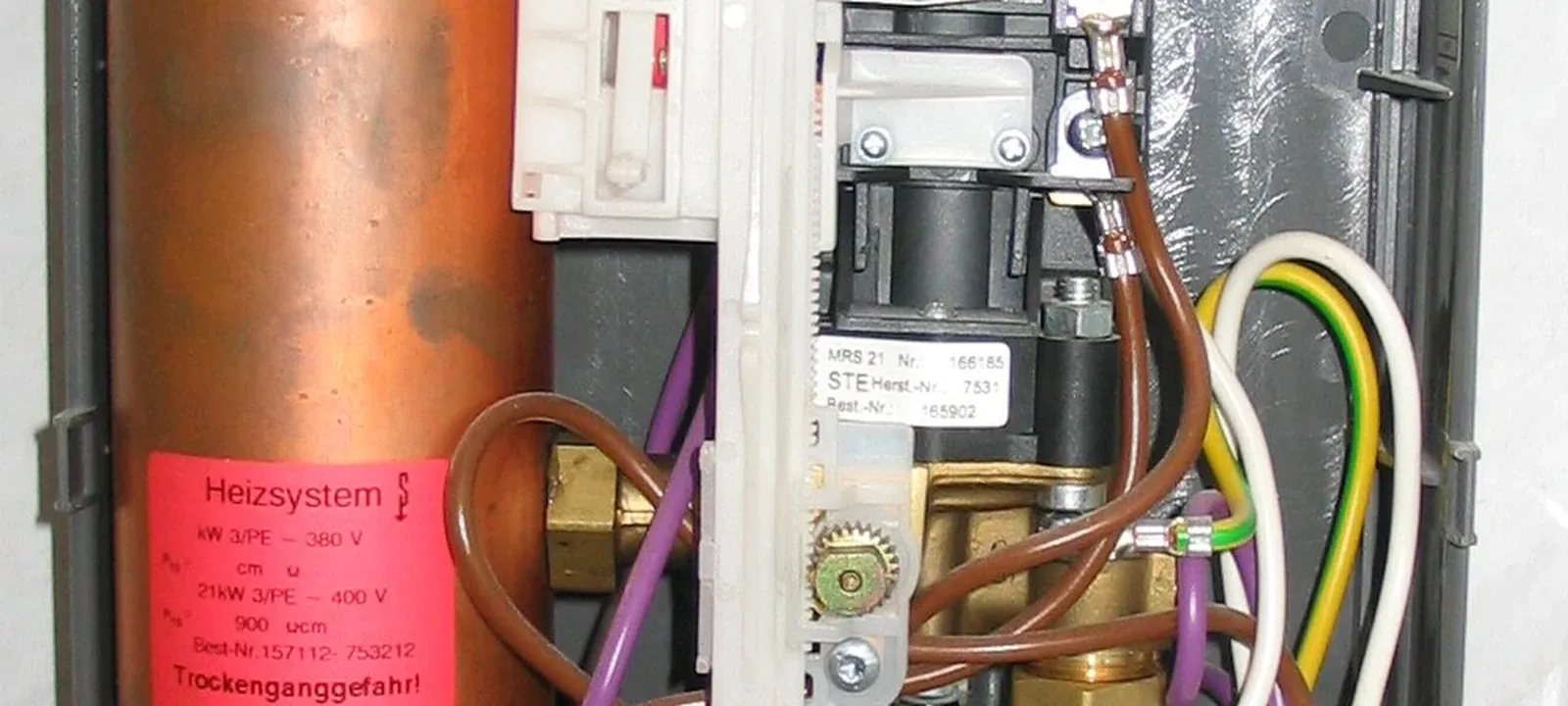
The hidden cost of tankless is water chemistry
The City of South St. Paul reports typical hardness of about 18 grains per gallon. That is hard water, and a tankless heat exchanger has narrow passages that scale can narrow further. Scale lowers output, triggers error codes and shortens the life of the unit.
Plan on a descaling flush on a schedule and consider a softener ahead of the heater. Our water softener and filtration page explains how softening protects the heat exchanger.
Is a tankless heater a fit for your home?
Run through this list before you choose one.
- Your gas line can deliver the higher BTU load or you have the electric capacity
- You have a path for new venting, which may differ from a tank's flue
- You are willing to flush it on a schedule
- Your household uses hot water in steady amounts, not many outlets at once
- You plan to stay long enough to recover the higher first cost
Tank versus tankless in plain terms
Neither is better in every house.
| Factor | Tank | Tankless |
|---|---|---|
| Hot water supply | Limited by tank size | Continuous at the rated flow |
| Space | Needs floor area | Wall mounted, small footprint |
| Maintenance | Annual flush, anode check | Scheduled descaling, filter cleaning |
| Install complexity | Simple swap in most homes | Often new venting or a larger gas line |
| Power outage | Gas tanks keep working | Needs electric power to run |
Our replacement page explains the like-for-like option.
How we service a tankless unit
Flushing and repair follow a short routine.
Read the codes
Display errors point to flame, ignition, flow or temperature faults.
Isolate the unit
We close the valves and connect a pump and descaling solution.
Circulate and rinse
The heat exchanger circulates for a set time, then we flush clean.
Inspect and test
We clean the inlet screen, check the vent and test output.
Winter water and sizing
A tankless unit raises the temperature of whatever comes in. Incoming water in a Minnesota January is much colder than in July, so the same unit delivers less flow at your chosen temperature in winter. A unit sized only for summer will disappoint when two showers run in February.
We size against the cold-season case and ask how many fixtures you want running together. If the answer is more than a unit can cover, we say so and talk through a larger unit or a standard tank instead.
What a tankless job costs and why
Installation and service pricing follow the home.
Insurance does not cover tankless upgrades or scale damage. Some utilities or manufacturers offer rebates, so ask before you buy.
Sources for this page
Hardness comes from the City of South St. Paul's published water FAQ. Installation rules sit in Minnesota Rules chapter 4714, which is built on the Uniform Plumbing Code (UPC). Descaling intervals should follow your unit's manufacturer guidelines.
Questions people ask
In hard water, many manufacturers suggest at least once a year. With South St. Paul's reported hardness, we lean toward an annual flush and an earlier check if output drops.
Usually yes. Ignition, flow sensor and scale-related faults are the common ones, and we check the vent and gas supply too.
No. Even gas models need electricity for the controls and fan.
Often, yes. Tankless units draw a larger burst of gas than a tank. We measure the existing line and run before we quote.
It can be, because it saves space and avoids standby heat loss. The hard water maintenance still applies.
Yes. Our 24/7 line dispatches for no-hot-water calls, and see water heater repair for the emergency path.