When a clogged drain turns into an emergency
Most clogs are a nuisance. A few are urgent, and the difference usually shows up within an hour.
- Water coming up in a basement floor drain or tub when you run the washer means the main line is blocked. Stop all water use in the house.
- More than one fixture gurgling or draining slowly at the same time points to the main, not the sink trap.
- Sewage smell or standing water near the drain is a health risk. Keep children and pets out of the room.
- If the backup is in a rental or shared building, call the owner and us. The cleanup clock starts when water reaches finished floors.
What happens on a drain cleaning visit
We start by asking which fixtures are affected and what was running when it backed up. That alone narrows most jobs to a branch line or the main.
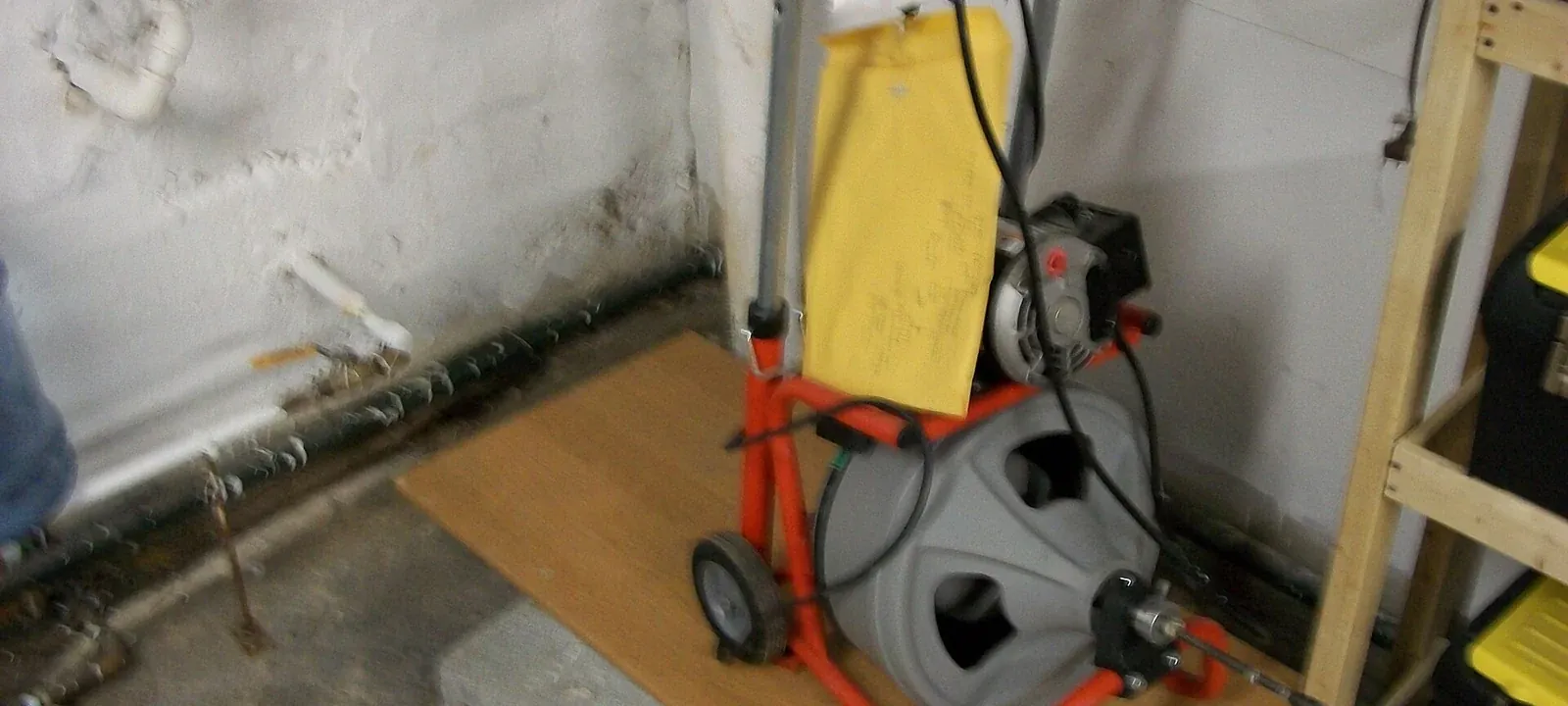
A small hand auger clears a tub or lavatory trap. A drum machine with a cutting head handles kitchen lines and 3 or 4 inch laundry stacks. When the cable keeps pulling back greasy or rooty material, we tell you a camera or hydro jetting will hold up better than another pass with a blade.
Cable work is quick, but we do not guess. If the line will not clear after a reasonable pass, you hear that at the cleanout and not on the invoice.
Which method fits which clog
The tool follows the pipe size, the material in the line and how often it has clogged before.
| Problem | Usual cause | Usual method |
|---|---|---|
| Slow bathroom sink | Hair and soap film in the trap arm | Hand auger or trap cleaning |
| Kitchen sink backing up | Grease and food solids | Drum cable with a cutting head |
| Tub and shower both slow | Hair at a shared branch | Cable from the cleanout |
| Basement floor drain bubbling | Main line blockage | Main line cable, then a camera |
| Same clog returns every few months | Roots or a belly in older pipe | Camera, then hydro jetting or repair |
Pipe material and age change what is safe to run through a line. We check before we cut.
Why older South St. Paul homes clog more often
The city's 2040 planning documents put about 74 percent of homes in South St. Paul as built before 1970, and most of the older stock sits above the bluff west of Concord Street. Homes from that period often have cast iron or clay sewer lines, and both collect scale and tree roots over decades.
That does not mean your line is failing. It means a stubborn clog deserves a camera look before the third cleaning in two years. If the camera shows a crack or a sag, sewer line repair is a better spend than repeated cabling.
Is it your line or the city's?
The City of South St. Paul maintains the sewer main in the street. The line from your house to that main is yours. If every home on your block is backing up, call city Public Works at 651-554-3225 on weekdays or 911 after hours.
The city also asks residents to contact its Utilities Division before hiring a drain cleaner and to report it after a private line has been cleaned. We will point you to the right number and clean only the part that belongs to you.
What drives the price of a drain cleaning
We do not post a flat number because the same symptom can be a ten minute job or a two hour one. These are the real factors.
Homeowners insurance usually pays for water damage after a sudden backup only when you carry sewer backup coverage, so check your policy. Plain cleaning of a clogged line is normally a maintenance cost.
Sources for this page
The housing-age figure comes from the City of South St. Paul's 2040 planning documents. The owner-responsibility and notification guidance comes from the city's utility pages, and weekday Public Works hours come from the same source. Plumbing work in Minnesota follows Minnesota Rules chapter 4714, built on the Uniform Plumbing Code (UPC).
Questions people ask
Yes. The 24/7 line connects you to dispatch at any hour, and we book same-day appointments when available for drains backing up into living space. Stop using water and call.
We advise against it for a main line backup. The product sits in standing water, can burn skin and makes it unsafe to open the line by hand. For a slow sink, a plunger is the safer first step.
Look at the lowest drain in the house. If the basement floor drain gurgles or water rises when you flush or run the washer, the main is likely blocked. One slow sink is almost always a branch clog.
A properly sized cutting head and a steady hand do not harm sound pipe. Fragile clay or thin cast iron changes the plan, and a camera helps us decide.
The city of South St. Paul asks residents to notify it after a private sewer line is cleaned. A quick call to the Utilities Division through the main city number, 651-554-3200, covers that.
A sink or tub clog is often cleared in under an hour. A main line with roots or a camera inspection runs longer, and we give you the plan before the machine goes in.