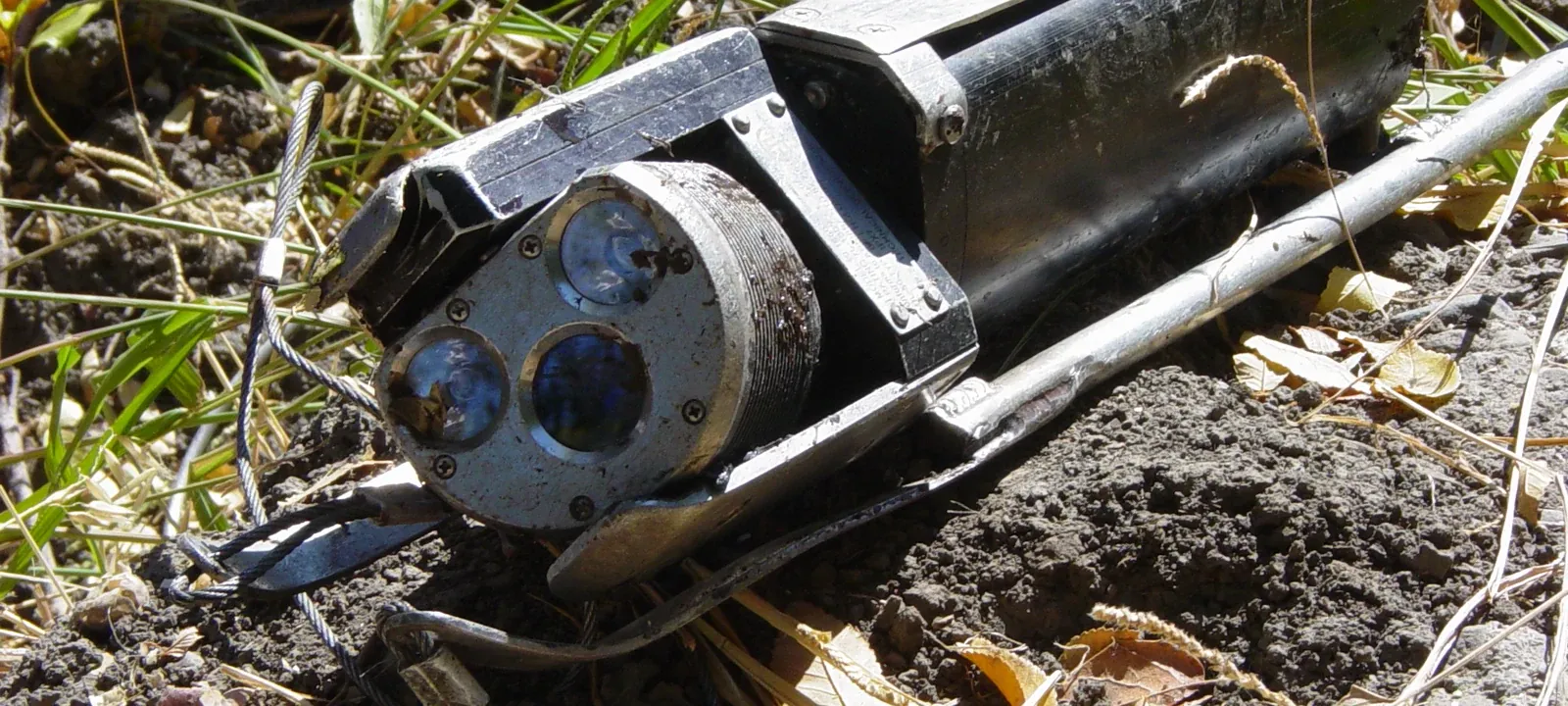
What a camera inspection shows
We feed a small waterproof camera through the cleanout and watch the monitor as it travels toward the main. The camera records pipe material, joints, roots, cracks, offsets, low spots that hold water and any sign of collapse.
We note how far from the cleanout each issue sits, so you know whether a defect is under the house, the driveway or the lawn. You walk away with the video and a plain description of what you saw.
What we see and what it means
A camera finding is only useful if you know what to do with it.
| Finding | What it suggests | Typical next step |
|---|---|---|
| Roots at joints | Water is escaping and attracting roots | Cut and jet, then consider lining |
| Cracked or broken pipe | Structural damage | Spot repair or lining |
| Offset joint | Soil movement or a failed joint | Repair at the joint |
| Standing water in a belly | Pipe sagged over time | Monitor or replace the section |
| Heavy scale or grease | Narrowed pipe | Hydro jetting |
| Clean sound pipe | No action needed | Keep the video for your records |
Inspections find problems at the time of the visit and do not predict the future.
When a sewer inspection is worth it
Not every home needs one, but these situations usually do.
- You are buying an older house, especially one built before 1970
- A drain has clogged more than twice in a year
- You see mature trees close to the sewer line
- Your yard has a damp or sunken stripe along the line
- You are planning a basement bathroom and want to know the line can handle it
Buying or selling in South St. Paul
The city's 2040 planning documents put about 74 percent of local homes as built before 1970, and over 60 percent before 1960. A line from that period may be clay or cast iron, and a camera tells a buyer which one it is.
The City of South St. Paul runs a Time of Sale program, and the city office at 651-554-3220 can tell sellers what it requires. Ask your agent and the city early so an inspection result does not surprise anyone at closing.
How sewer inspection is priced
The visit price depends on access and what you want on paper.
Insurance does not cover an inspection. If the camera finds damage from a sudden covered event, keep the video for the claim.
What to do with the video
Keep the recording. If a defect shows up, send a copy to your insurer, your real estate agent or a second plumber for a second opinion. If the line is clean, the video is a baseline you can compare against in future years.
When a seller shares a video, check the date and make sure the camera reached the main. A short video that ends at the foundation shows little. Ask for the whole run.
Sources for this page
The housing-age figures come from the City of South St. Paul's 2040 planning documents. The Time of Sale program number comes from the city. Camera inspection findings follow common industry practice, and repair rules follow the Uniform Plumbing Code (UPC) as adopted in Minnesota Rules chapter 4714.
Questions people ask
Most residential lines take one to two hours including setup, depending on length and access.
Yes. We review it with you on site and can share the recording after the visit.
It tells us the distance from the cleanout. With a locator, we can mark that spot at the surface.
The city maintains the main. The private line is the owner's responsibility, so you inspect it yourself.
Planned inspections are scheduled for the day. For active backups our 24/7 line dispatches same-day when available.
It is one input. A home inspector covers the structure, and the camera covers the pipe underground.