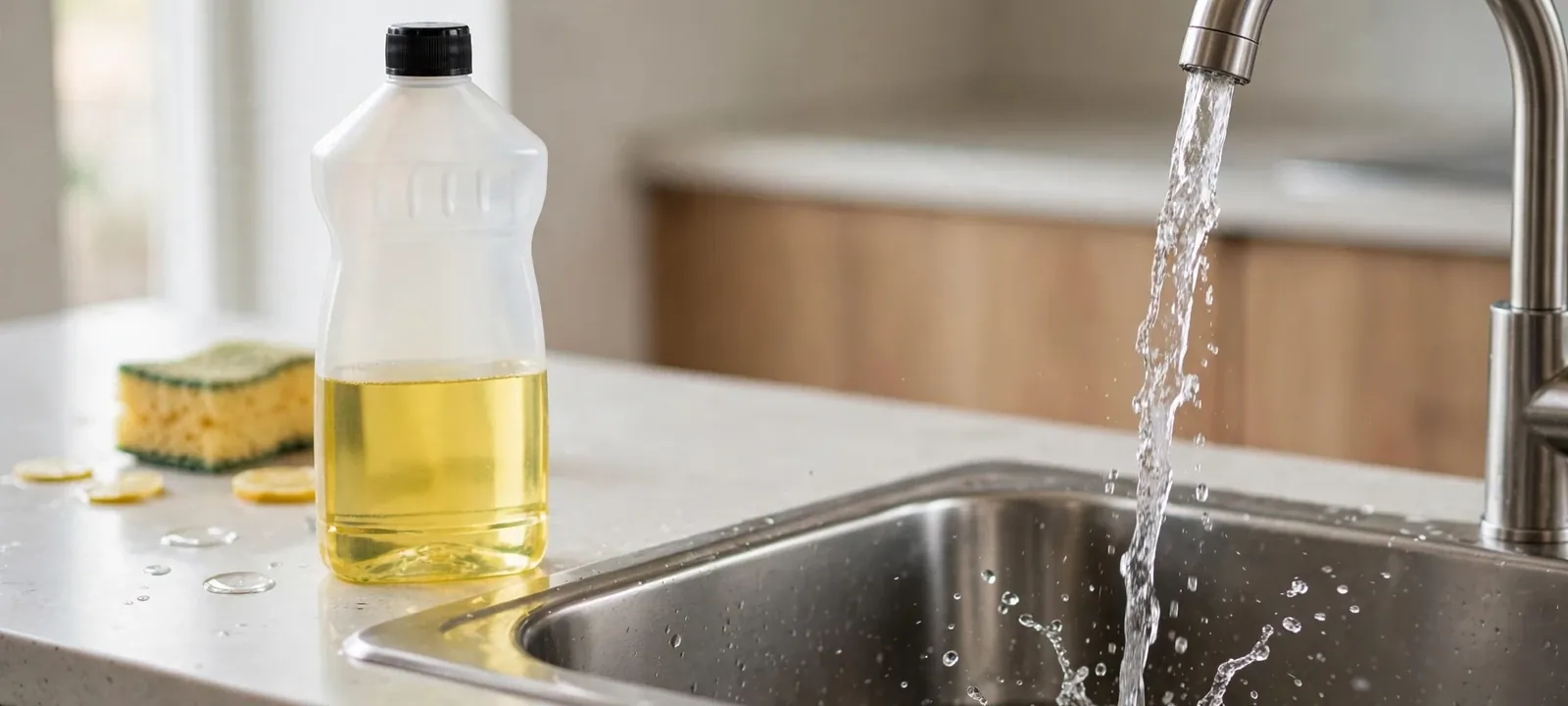
What enzyme cleaners can and cannot do
Set expectations before you buy.
| Problem | Enzyme cleaner | Better tool |
|---|---|---|
| Grease film in a kitchen line | Helps over days | Hot water, then hydro jetting if heavy |
| Soap scum in a slow tub | Helps a little | Remove the stopper and clean it |
| Hair clog | Does not dissolve hair | Hair snare or hand auger |
| Tree roots | No effect | Cable and camera |
| Full blockage | Too slow | Cable or a plumber |
Follow the label. Do not mix products.
How to use one well
Use enzyme cleaner at night, when the drain will sit unused for several hours. Pour the dose down the drain and do not flush it with hot water right away. The enzymes need time to work on the buildup. Repeat on a schedule that the label states, usually weekly at first and then monthly.
Expect a slow improvement and not an instant one. If the drain still runs slowly after two or three treatments, the clog is something enzymes cannot touch.
Why not harsh chemicals
Strong chemical openers contain lye or acids. They sit in standing water, can burn skin and eyes, and make it unsafe for a plumber to open the line by hand. They can also damage old metal pipe and plastic traps.
Enzyme products are gentler, but still follow label directions, and never mix them with bleach or other cleaners. If a chemical opener has been poured in, tell your plumber before the cable goes in.
Local note: where South St. Paul wastewater goes
South St. Paul wastewater flows through the city's sewers to the Metropolitan Council's treatment system. The City of South St. Paul also maintains the sewer main, while the line from your house to that main belongs to you. Source type: city utility pages.
Because the private line is yours, a clog you cannot clear is your decision to resolve. The city asks residents to contact its Utilities Division before hiring a drain cleaner and to report cleaning after the fact. See our drain cleaning page for the process.
Maintenance habits that help more than any bottle
Keep grease out of the drain. Let it cool, then scrape it into the trash. Use strainers in showers and tubs. Rinse the kitchen sink with hot water after washing greasy pans.
If you rent or manage a building, tell tenants not to flush wipes. In Newport, the city sewer dates to 1965 and was built with clay pipe. In West St. Paul, the Metropolitan Council reports more than 73 percent of housing predates 1970. Regular maintenance is the cheapest protection in both.
How to read the label
Look for the active ingredient. Some products use live bacteria, and some use isolated enzymes. Bacterial products take longer to build up in the pipe but can keep working for days. Enzyme-only products act faster on certain types of buildup, such as fats and starches, and wear out sooner.
Check the stated purpose. A product for grease traps is not the same as one for a bathroom sink. Check the storage instructions too, since heat and age kill the active ingredient. A bottle that has sat in a hot garage may do nothing at all.
Which drain gets which treatment
Where enzymes help most, and where they do not.
| Drain | Enzyme value | Notes |
|---|---|---|
| Kitchen sink | Moderate | Helps with grease film and food residue, not a full plug |
| Bathroom sink | Low | Hair and toothpaste dominate, and a hair tool works better |
| Shower and tub | Low to moderate | Soap scum responds, hair does not |
| Floor drain | Moderate | Keeps odors down when the trap is wet |
| Main sewer line | Very low | Roots and scale are not organic buildup |
If a drain stays slow after two or three treatments, move on to a physical fix.
Safety notes before you pour
Read the label for warnings. Enzyme products are generally milder than caustic cleaners, but they are not food. Keep them away from children and pets, and do not mix them with bleach, ammonia or acid cleaners. Mixing can release harmful fumes.
Wear gloves if the label asks for them, and ventilate the room. If you pour a product and the drain backs up, do not keep adding more. Stop and call. Standing liquid in the line is a hazard for whoever opens the drain next.
When to stop treating and call
Three signs say the problem is bigger than a treatment can handle. A drain that backs up into another fixture, a smell of sewage that returns after cleaning and a drain that slows again within days all point to a blockage or a damaged pipe.
At that stage another bottle only delays the diagnosis. A cable or a camera will show what is in the line, and the plumber can tell you whether it is a one-time clog or a pattern.
Sources for this page
Sewer ownership and wastewater treatment details come from the City of South St. Paul's utility pages. Product guidance follows manufacturer labels. Safety advice follows standard household chemical guidelines.
Questions about this topic
Most are labeled safe for both, but check the label. They are gentler than caustic openers.
Days to weeks of regular use. They are slow.
No. Use a plunger or call a plumber.
It helps with organic film but not with scale or roots. A camera tells us which you have.
The City of South St. Paul asks residents to notify it after a private line is cleaned.