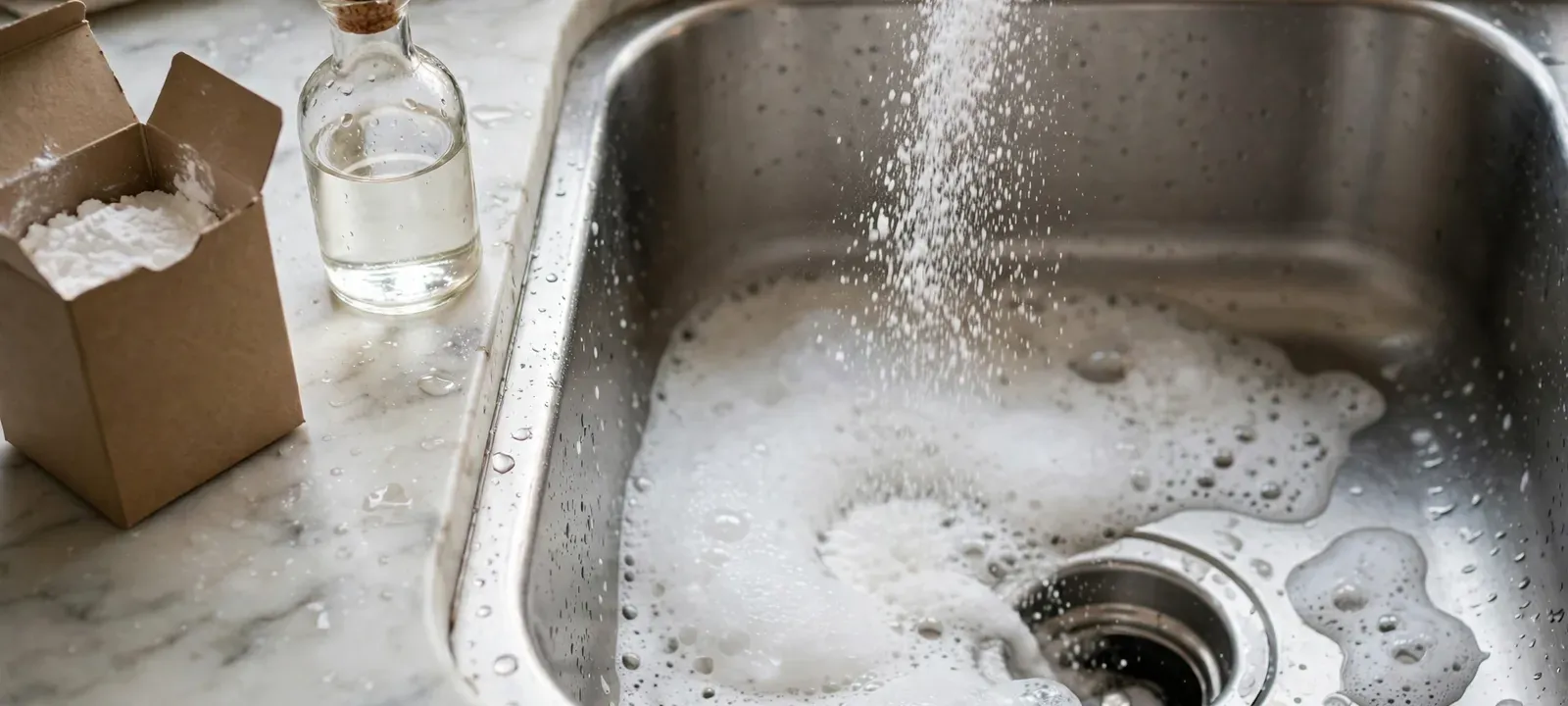
The baking soda method
Use it on a slow but not blocked drain.
Clear standing water
Bail out the sink or tub so the mixture reaches the pipe.
Add baking soda
Pour about half a cup down the drain.
Add vinegar
Pour in a cup of white vinegar and cover the drain for ten minutes.
Flush
Run hot tap water for a minute. Repeat once if the drain is still slow.
What to try for what you see
Start with the cheapest tool that matches the problem.
| Problem | Try first | Then |
|---|---|---|
| Slow bathroom sink | Remove the stopper and clean hair | Baking soda and vinegar |
| Slow tub | Hair catcher and drain tool | Cable |
| Slow kitchen sink | Hot water and dish soap | Plumber with a cable |
| Several drains slow | Stop and call | Main line issue |
| Foul smell only | Baking soda and vinegar | Clean the trap |
Hot water from the tap is fine. Pouring boiling water on a porcelain sink or a PVC joint can crack or soften it.
Why it often does not work
A true clog is a mass, not a film. A wad of hair with soap in a tub drain does not dissolve in vinegar. A grease plug in a kitchen line is already solid. The foam stays on top, runs off and leaves the plug in place.
If you repeat the treatment more than twice and the drain still gurgles, you have lost time. A hand auger or a hair tool reaches the clog directly. If more than one drain is affected, stop using water and call.
Local note: older homes and older drains
The City of South St. Paul's 2040 planning documents say about 74 percent of local homes were built before 1970, with the oldest concentrated above the bluff west of Concord Street. Source type: city planning documents. Homes of that age often have cast iron drains, which develop rough interior surfaces over decades.
A rough interior holds hair and grease more easily. That means a home here may need a physical cleaning more than a fizzing treatment. Our hydro jetting page explains the next step when a cable alone does not hold.
What to avoid
Do not mix baking soda and vinegar with commercial chemical cleaners. The mix can release fumes or splash. Do not use a plunger after a chemical cleaner has been poured, since the splash is caustic.
If you have a septic system or a drain that is slow in more than one fixture, skip home remedies and ask a plumber. In West St. Paul and Mendota Heights, where owners are responsible for the private line, a main line clog is the owner's repair.
Kitchen drains are different from bathroom drains
Kitchen drains clog with grease, starch and food. Bathroom drains clog with hair and soap. Baking soda and vinegar can loosen a thin layer of grease film, but a bathroom clog is mostly hair wound around the pipe, which the foam does not touch.
For a kitchen sink, hot tap water and a squirt of dish soap pushed through the line after the treatment helps carry loosened grease along. For a bathroom sink, lift out the stopper and clean it by hand. That one step solves most slow bathroom sinks.
Low-tech steps that work better
Try these before you buy anything.
Plunge properly
Use a cup plunger, cover the overflow with a wet rag and push and pull ten times.
Clean the trap
Put a bucket under the P-trap, loosen the slip nuts and empty the trap.
Use a drain tool
A plastic barbed strip pulls hair out of a tub or sink drain.
Flush with hot water
Run the hot tap for a minute afterward to carry out loosened residue.
A simple monthly routine for every drain
Prevention beats a clog. Once a month, lift out and clean each sink and tub stopper, pour a kettle of hot tap water down the kitchen drain and rinse the bathroom sinks with a short blast of hot water. Wipe the overflow opening with a small brush, since that hidden channel collects film and smells.
Add a hair catcher to the shower and tub. It costs very little and stops the clog most homes in older housing stock deal with. If you ever hear a gurgle from a drain far from where you run water, that is a sign of a partial blockage in a shared line, and a cable will do more than any treatment.
Sources for this page
Housing-age figures come from the City of South St. Paul's 2040 planning documents. Material cautions follow manufacturer guidelines for plastic and porcelain fixtures.
Questions about this topic
No. A toilet clog is a mass that needs a plunger or an auger.
In small amounts, yes. It is milder than caustic chemicals.
Once a month is fine for maintenance.
A dry trap or a dirty overflow can smell. Run water in unused drains and clean the overflow.
The City of South St. Paul asks residents to notify it after a private sewer line is cleaned. Home remedies in a sink do not count.